If you're comparing Sutyo vs Chamelo, you're already looking beyond traditional sunglasses. Both brands explore electronically controlled lenses that can change tint, giving wearers more control over light than fixed-tint sunglasses.
But they are not identical products.
Chamelo has built a broader smart-eyewear ecosystem around adjustable tint, including models with built-in audio and automatic tint modes. Sutyo takes a more focused approach to electrochromic eyewear, combining adjustable light and color with a design-led philosophy.
So which is better?
There isn't one universal winner. The better choice depends on whether you prioritize adjustable tint as part of a broader smart-glasses experience or want eyewear centered on light, color, and understated design.
Sutyo vs. Chamelo: What Do They Have in Common?
Before comparing the differences, it helps to understand why these two brands are often considered in the same conversation.
Both move beyond traditional fixed-tint sunglasses by using electronically controlled lens technology.
Both Offer Adjustable Tint
Traditional sunglasses give you one fixed optical state.
Adjustable tint sunglasses take a different approach. The lens can move between different levels of light transmission, allowing you to adapt the tint to your environment.
Sutyo's LightShift models offer continuous tint adjustment between Category 1 and Category 3, while its Prism Veil model combines LightShift with ColorShift technology.
Chamelo also offers a range of electronically adjustable lenses. Its Prime model, for example, provides manual tint adjustment through a slider as well as an automatic mode based on surrounding light.
So at the most basic level, both brands address the same problem:
Why should one pair of sunglasses have to stay at one tint all day?
Both Move Beyond Photochromic Lenses
Photochromic lenses typically rely on UV exposure to trigger a change.
Electrically controlled lenses take another approach: the wearer or an electronic system controls the optical state.
That distinction can be particularly relevant when moving between different environments, such as bright outdoor spaces, shaded streets, and vehicles.
The important point is that adjustable tint is not one single technology experience.
The interaction, speed, tint range, controls, battery system, and overall product design can all be different.
Sutyo vs. Chamelo: Where Are They Different?
This is where the comparison becomes more useful.
Both brands offer adjustable tint, but their products emphasize different experiences.
Sutyo Focuses on Light, Color, and Design
Sutyo positions its eyewear around the relationship between light, color, and form.
Its technology platform uses dyed liquid crystals. According to Sutyo's technology documentation, an electrical signal changes the molecular alignment of the liquid-crystal layer, continuously adjusting how light passes through the lens.
The result is not simply a darker or lighter lens.
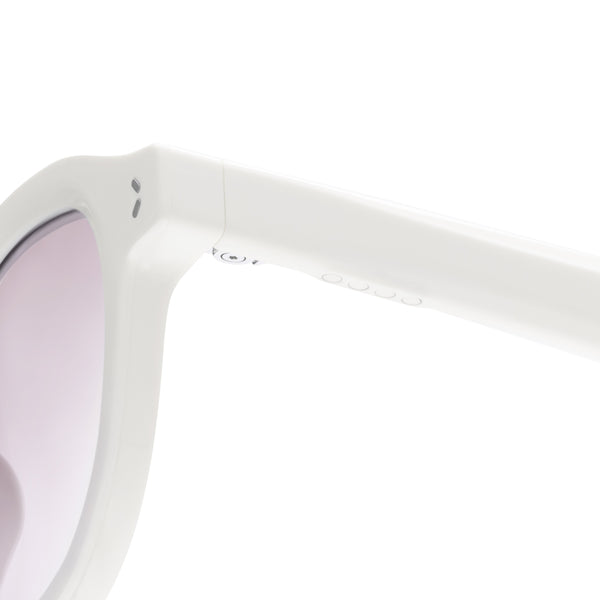
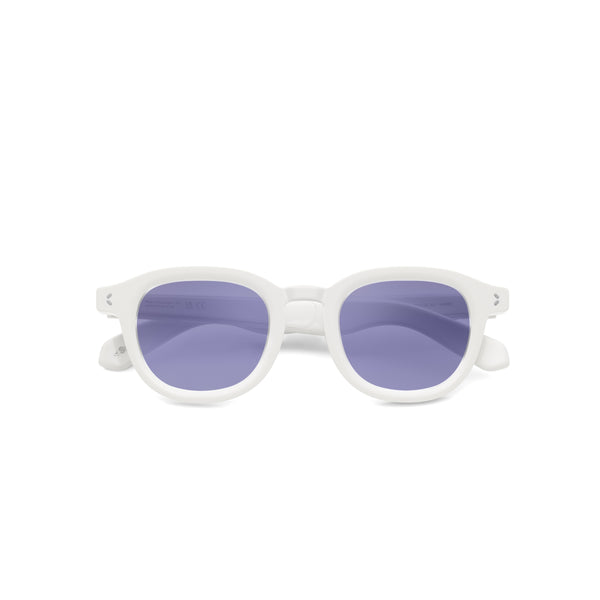
Sutyo also develops ColorShift, allowing selected models to transition between colors. The Prism Veil, for example, combines ColorShift with LightShift and is designed to move from Category 1 to Category 3 while also shifting between colors.
This makes Sutyo's product proposition relatively focused:
Light adjustment + color expression + eyewear design.
The technology is intended to be part of the eyewear rather than the entire identity of the product.
Chamelo Expands Adjustable Tint Into Smart Eyewear
Chamelo takes a broader smart-eyewear approach.
Its product range includes adjustable-tint sunglasses as well as models with built-in audio, Bluetooth connectivity, microphones, and other smart features. Its Dusk model, for example, combines electronically adjustable tint with built-in audio.
Its Prime model demonstrates another direction: it combines manual tint adjustment with an automatic tint mode that uses an ambient-light sensor to adjust the lenses according to surrounding conditions.
So the difference can be summarized simply:
| Sutyo | Chamelo | |
|---|---|---|
| Core focus | Light, color & eyewear design | Smart eyewear & adjustable tint |
| Adjustable tint | Yes | Yes |
| Electrochromic technology | Yes | Yes |
| Continuous/manual adjustment | Yes | Depends on model |
| Color-changing lens options | Yes | Yes, selected models |
| Built-in audio | Focuses on eyewear rather than audio | Available on selected models |
| Automatic tint | Focus on direct control | Available on selected models |
| UV protection | UV400 on current Sutyo models | 100% UV protection on listed models |
The important qualifier is “selected models.”
Neither brand has one single product with every feature. Chamelo's specifications vary across its range, and Sutyo's LightShift and ColorShift experiences are also model-dependent.
Which Electrochromic Sunglasses Should You Choose?
Instead of asking which brand is universally better, start with how you want to use the sunglasses.
Choose Sutyo If Light and Design Come First
Sutyo may be a stronger fit if your priority is a pair of sunglasses that combines:
- Adjustable tint
- Direct control over light
- Color-changing options
- A fashion-oriented design approach
- Everyday wear rather than a technology-heavy appearance
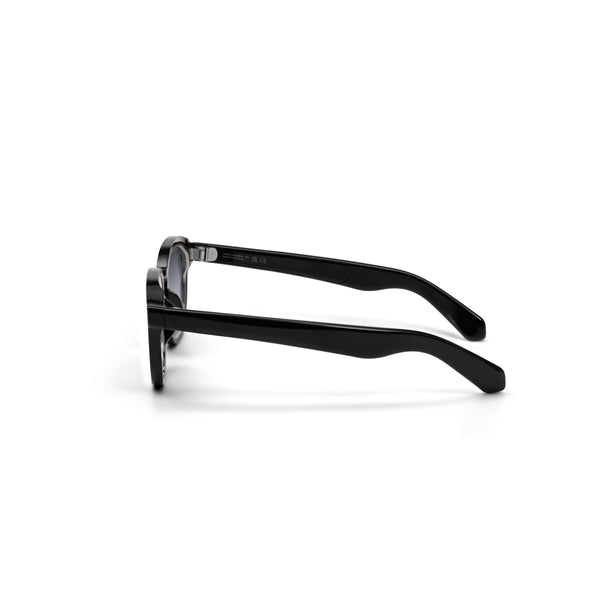
Sutyo's current collection includes several LightShift models with Category 1–3 tint adjustment, while Prism Veil adds ColorShift functionality. The collection is also positioned around prescription readiness, UV400 protection, IPX4 resistance, and magnetic charging.
The idea is relatively simple:
Technology should expand what sunglasses can do without making the sunglasses feel like a gadget.
Choose Chamelo If You Want More Smart Features
Chamelo may make more sense if you want adjustable tint to be part of a broader smart-glasses experience.
Depending on the model, Chamelo offers:
- Adjustable tint
- Automatic tint adjustment
- Built-in audio
- Bluetooth connectivity
- Microphones
- Sport-oriented designs
- Different tint ranges and control systems
For example, Chamelo's Prime combines manual and automatic tint control, while Dusk adds built-in audio to its adjustable-tint system.
That makes Chamelo particularly interesting for people who want their sunglasses to perform several technology-related functions at once.
Frequently Asked Questions
Is Sutyo better than Chamelo?
Neither brand is universally better. Sutyo focuses more heavily on light, color, and design-led electrochromic eyewear, while Chamelo offers a broader smart-eyewear ecosystem that can include adjustable tint, automatic tint, and built-in audio depending on the model.
Are Sutyo and Chamelo both electrochromic sunglasses?
Both brands offer electronically controlled tint-adjustable eyewear. Sutyo's technology uses dyed liquid crystals, while Chamelo's products use its own Eclipse or HVL lens systems depending on the model.
Which has better adjustable tint, Sutyo or Chamelo?
It depends on the model and what you want from the tint system. Sutyo emphasizes continuous LightShift adjustment, while some Chamelo models offer manual slider control and others add automatic tint adjustment through an ambient-light sensor.
Do Sutyo Sunglasses change color?
Selected Sutyo models do. Prism Veil combines LightShift with ColorShift, allowing the lens to transition between different colors as well as adjust its tint.
Do Chamelo sunglasses have audio?
Selected Chamelo models do. Its Dusk and other smart-eyewear products integrate built-in audio, while other models focus primarily on adjustable tint.
Are Sutyo Sunglasses suitable for everyday wear?
Sutyo's current collection is positioned for everyday use, with models offering UV400 protection and IPX4 water resistance. Several models also feature magnetic charging and prescription-ready functionality.
Two Approaches to the Future of Sunglasses
The comparison between Sutyo and Chamelo is ultimately less about finding a single winner and more about seeing where adjustable eyewear can go.
Chamelo demonstrates how electronically controlled lenses can become part of a broader smart-eyewear platform, combining adjustable tint with features such as audio and automatic light sensing.
Sutyo explores another direction.
What happens when the technology stays sophisticated, but the experience remains centered on light, color, form, and the act of wearing sunglasses?
That question is at the heart of Sutyo's approach.
So if you're comparing Sutyo vs Chamelo, don't only ask:
“Which sunglasses have more technology?”
Ask:
“What do I want my sunglasses to do for me?”
If you want eyewear built around light adjustment, color expression, and design, Sutyo offers a focused interpretation of electrochromic sunglasses.
Light changes. Your sunglasses can change with it.
Explore Sutyo
Discover LightShift, ColorShift, and a different approach to adjustable tint eyewear.