Electrochromic sunglasses are sunglasses with instant, user-controlled tint: an electric current — not sunlight — drives the lens between light and dark, continuously, in milliseconds. That makes them different from dimmable sunglasses that rely on a passive UV reaction, like photochromic ("transition") lenses, which take 30 seconds to 2 minutes to catch up with the light and don't work in the car, because windshields block the UV they need. This piece explains what "electrochromic" actually means, how it compares to photochromic, and where instant tint matters most.
Electrochromic vs. photochromic, at a glance
| Electrochromic (Sutyo) | Photochromic (Transitions and similar) | |
|---|---|---|
| How tint changes | Electrically driven, continuous, millisecond-level | UV-triggered chemical reaction, 30 s–2 min |
| Who's in control | You - slide the temple for adjustable tint | The environment (passive) |
| Works in the car | Yes - not UV-dependent | No - windshields block UV, lenses stay clear |
| Temperature sensitivity | None | Slower in cold, lighter in heat |
| Tint levels | Continuous / user-controlled + presets | Determined by light exposure only |
| Power source | Battery, ~10-day standby [VERIFY] | None |
| Typical price | $239–299 | Lens upgrade ~$100–250 |
Why "instant tint" is the actual difference — not just a faster version of the same thing
Photochromic lenses aren't slow by accident — they're passive by design. The lens reacts to UV exposure through a chemical process, which means the lens is always a little behind whatever the light is actually doing. Electrochromic sunglasses skip that reaction entirely: the tint is electric, so it moves the instant you move it. Slide the temple and the lens darkens on a bright highway; slide back and it lightens entering a tunnel. There's no reaction to wait out, because there's no reaction — just adjustable tint, on command.
This is also why electrochromic sunglasses work in the car and photochromic lenses often don't. Windshields block most UV light. Photochromic lenses need that UV to trigger darkening, so behind glass they can stay stubbornly clear exactly when the sun is lowest and hardest to deal with. Electrochromic tint was never waiting on UV in the first place, so glass doesn't change anything.
How the control actually works
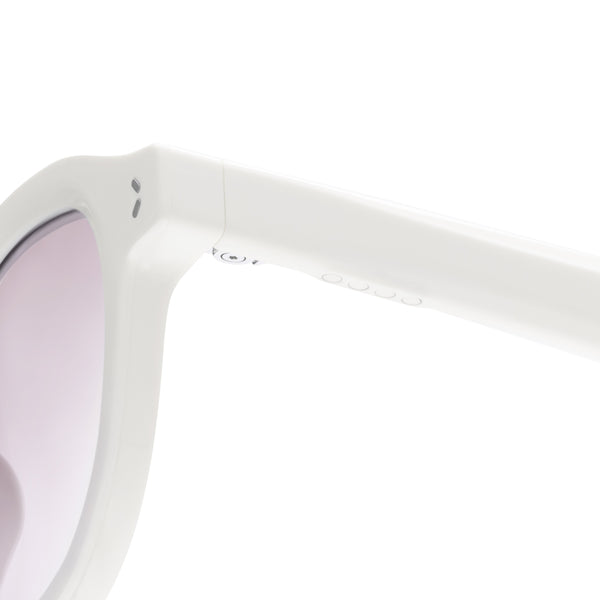
Sutyo Sunglasses use dye-doped liquid-crystal lenses with continuous, user-controlled tint adjustment — slide a finger along the temple and the depth of tint moves with your finger, in milliseconds; double-tap to jump to a saved preset. No app, no buttons to hunt for. We call this Worn, Not Operated: adjusting tint should feel as automatic as putting the glasses on, not like managing a device.
Sutyo Sunglasses are electrochromic sunglasses — no camera, no data, tint only. The only electronics in the frame drive the lens tint; nothing records, transmits, or remembers anything.
Quick answers
Are electrochromic sunglasses the same as smart glasses? No. "Smart glasses" typically means camera- or AI-equipped eyewear. Electrochromic sunglasses are tint-only — Sutyo's have no camera, no microphone, and collect no data.
Do electrochromic sunglasses work behind a car windshield? Yes. Because the tint is electrically driven rather than UV-triggered, it isn't affected by windshield glass blocking UV — unlike photochromic lenses, which often stay clear in the car.
How fast is the tint change, really? Continuous and millisecond-level, moving as you slide the temple — not a fixed "before/after" like photochromic lenses, which take 30 seconds to 2 minutes to fully react.
Where instant, adjustable tint actually matters
- Driving into low sun or through a tunnel — tint that isn't waiting on UV through glass.
- Cycling through tree cover and open road — light changes faster than a slow chemical reaction can track.
- Moving between indoors and outdoors all day — no lag at the door, no lenses stuck dark inside.
None of these are edge cases - they're what a normal day with changing light looks like, and exactly where a passive, reactive lens shows its limits.
The honest trade-off
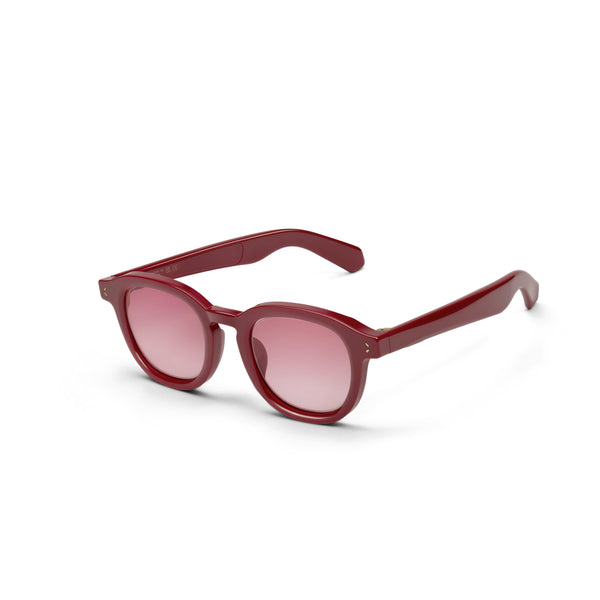
If you're mostly outdoors in stable, sunny light and rarely drive, photochromic lenses' lag may never bother you, and they're cheaper up front with no charging to think about. If you drive, ride, or move through light faster than a chemical reaction can keep up, that's the specific gap electrochromic sunglasses were built to close. Sutyo's four models run $239–299, with clip-in prescription inserts from +$59–99 depending on range, and roughly 10 days of standby per charge via magnetic POGO charging .