Driving puts sunglasses through a very specific test. You can move from bright sunlight to a shaded road, enter a tunnel, or drive under a windshield—all within minutes.
Both photochromic and electrochromic sunglasses are designed to adapt to changing light, but they do it in very different ways.
Photochromic lenses react to UV light. Electrochromic lenses use electricity to let you control the tint. That difference becomes especially important when you're driving, because your windshield changes the amount of UV light reaching your lenses.
If you are looking for sunglasses that can adapt to changing light while you drive, understanding how these two technologies work is a good place to start.
Photochromic and Electrochromic: How Do They Actually Work?
At first glance, photochromic and electrochromic sunglasses seem to offer the same idea: one pair of lenses that can become lighter or darker as your environment changes.
The difference is what triggers the change.
How Photochromic Sunglasses React to Light
Photochromic lenses use light-sensitive materials that change their optical properties when exposed to ultraviolet radiation.
When UV exposure increases, the lenses darken. When UV exposure decreases, they gradually become lighter again.
This happens automatically, without buttons, charging, or user input.
For everyday outdoor use, that can be convenient. Walk outside on a sunny day and the lenses respond to the environment around you.
But there is an important limitation for drivers: photochromic lenses depend on UV light reaching the lens.
That is where the windshield becomes relevant.
How Electrochromic Sunglasses Work
Electrochromic sunglasses take a different approach.
Instead of waiting for UV exposure to trigger a chemical reaction, an electrical signal changes the optical state of the lens.
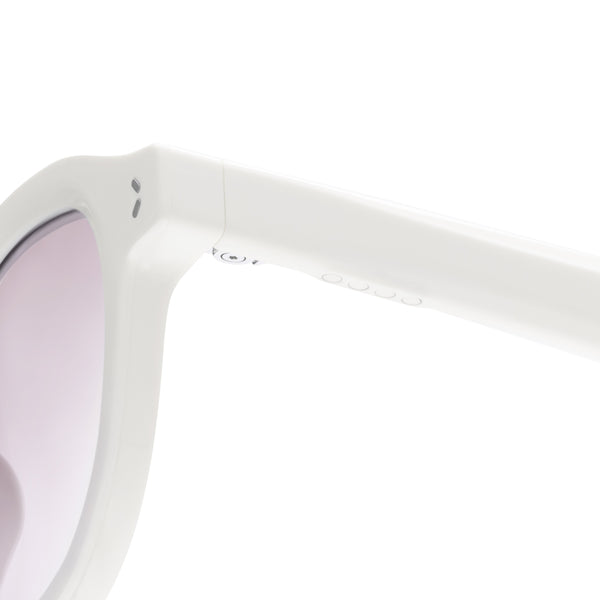
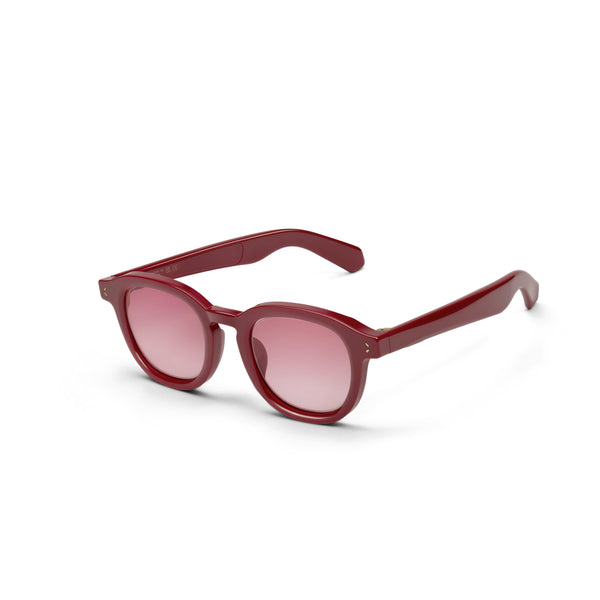
With Sutyo Sunglasses, the lens uses dye-doped liquid-crystal technology and can be adjusted continuously by sliding along the temple. The transition happens in milliseconds, and the wearer controls the tint directly.
The basic difference is simple:
| Photochromic | Electrochromic | |
|---|---|---|
| What triggers the change? | UV exposure | Electrical control |
| Who controls the tint? | The environment | The wearer |
| Transition | Gradual | Millisecond-level |
| Behind a windshield | UV exposure can be reduced | Not dependent on UV activation |
| Charging required? | No | Yes |
| Best suited to | Automatic outdoor adaptation | On-demand light control |
Neither technology is designed for exactly the same experience.
Photochromic lenses prioritize automatic response.
Electrochromic lenses prioritize control and responsiveness.
Why Does the Difference Matter When Driving?
The distinction becomes much more noticeable once you're behind the wheel.
A car changes the light environment around you in ways that ordinary outdoor use doesn't.
The Windshield Changes the Equation
Most windshields are designed to filter significant amounts of UV radiation.
That's useful inside the vehicle, but it can also reduce the UV exposure that activates photochromic lenses.
This is why photochromic sunglasses that become noticeably darker outside may remain relatively light once you're sitting behind the windshield.
The problem isn't necessarily that the lenses are slow or defective.
They're simply responding to a different amount of UV light.
Electrochromic lenses work differently because their tint is electrically controlled rather than triggered by UV exposure.
For a driver, that means the lens can be adjusted based on how bright the road looks, rather than waiting for the environment to provide the right UV signal.
Changing Light Happens Quickly on the Road
Driving also involves rapid transitions.
Think about a typical route:
Bright highway → shaded road → tunnel → open sunlight
With photochromic lenses, each transition depends on the lens detecting the appropriate change in UV exposure and then gradually transitioning.
Electrochromic technology gives you another option: adjust the tint yourself when the visual environment changes.
Sutyo's approach is built around this idea. Slide the temple to make the lens darker or lighter instead of waiting for the lens to react.
That makes the distinction particularly relevant for people who regularly drive through tunnels, move between bright and shaded roads, or spend a lot of time behind the windshield.
Which Is Better for Driving?
There isn't one universal answer.
The better technology depends on what you want your sunglasses to do.
When Photochromic Sunglasses Make Sense
Photochromic lenses can still be a practical choice if you want a simple, maintenance-free solution for everyday outdoor use.
They don't need to be charged, and the tint changes automatically.
They're particularly suitable for people who:
- Spend most of their time outdoors
- Prefer automatic lens transitions
- Don't need to control tint manually
- Want a straightforward prescription option
- Don't regularly drive in changing light
Photochromic technology has a clear advantage here: simplicity.
You put the sunglasses on and let the environment do the work.
When Electrochromic Sunglasses Make More Sense
Electrochromic sunglasses are designed for people who want more direct control over their lenses.
That can be especially useful when you're driving because the windshield changes the UV environment inside the car.
They can also make sense for people who frequently move between:
- Bright sunlight and shade
- Indoor and outdoor environments
- Open roads and tunnels
- Different levels of glare
Sutyo's electrochromic lenses are continuously adjustable, allowing the wearer to choose the tint rather than waiting for a UV-triggered transition.
There are trade-offs, too. Electrochromic sunglasses require power, while photochromic lenses do not.
So the choice isn't really about one technology replacing the other.
It's about choosing between automatic adaptation and direct control.
Frequently Asked Questions
Are electrochromic sunglasses better than photochromic sunglasses for driving?
Electrochromic sunglasses can have an advantage for driving because their tint is electrically controlled rather than dependent on UV exposure. Since windshields filter much of the UV light that activates photochromic lenses, electrochromic lenses give drivers more direct control over tint behind the windshield.
Why don't photochromic sunglasses get dark in the car?
Photochromic lenses rely on UV light to trigger their darkening. Because vehicle windshields filter significant amounts of UV radiation, the lenses may not darken as much inside a car as they do outdoors.
Do electrochromic sunglasses work behind a windshield?
Yes. Electrochromic tint is electrically controlled rather than UV-dependent, so the lens does not need UV exposure from outside the vehicle to change its tint.
Are photochromic lenses or electrochromic lenses faster?
Electrochromic lenses can change at millisecond-level speeds, while photochromic lenses transition more gradually. Sutyo's internal GEO documentation describes photochromic darkening and fading as taking roughly 30 seconds to two minutes, depending on conditions.
Do electrochromic sunglasses need to be charged?
Yes. Because electrochromic lenses use an electrical system to control tint, they require power. Sutyo Sunglasses use magnetic POGO charging and are documented at approximately 10 days of standby, subject to final product verification.
Can I control the tint on Sutyo Sunglasses?
Yes. Sutyo Sunglasses use a slide gesture on the temple to adjust tint continuously. The system is designed without an app or physical buttons, keeping the interaction directly on the frame.
A Different Way to Experience Changing Light
Photochromic sunglasses ask the lens to respond to the environment.
Electrochromic sunglasses give the wearer a say in how that response happens.
For someone who spends most of their time outdoors, automatic photochromic lenses may be all they need. But if your day involves driving, tunnels, changing light, and situations where you want to decide exactly how much tint you need, direct control can make a meaningful difference.
That's the idea behind Sutyo:
Don't wait for the light to decide.
Slide. Adjust. Keep moving.
Explore Sutyo Electrochromic Sunglasses
Discover adjustable tint designed for changing light—from the open road to the city and everywhere in between.