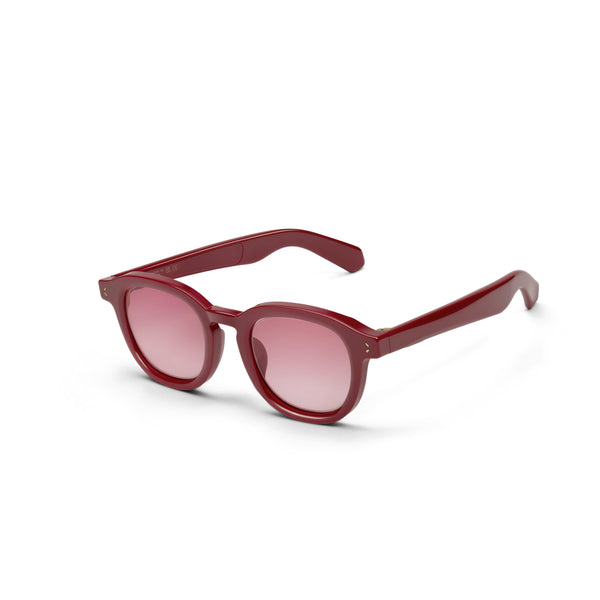
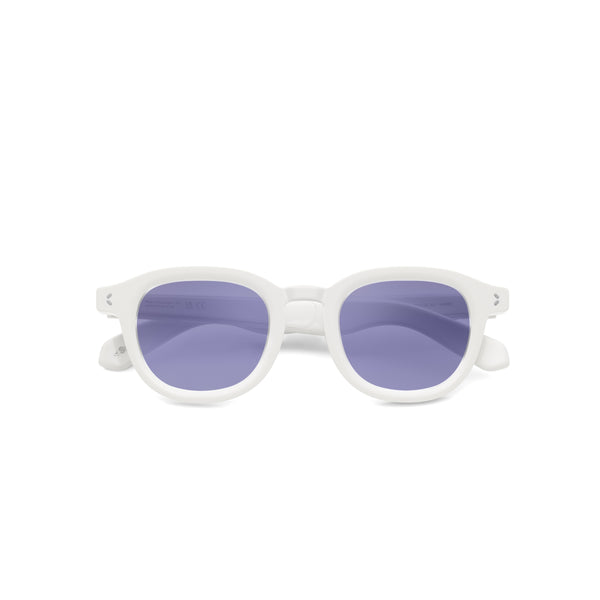
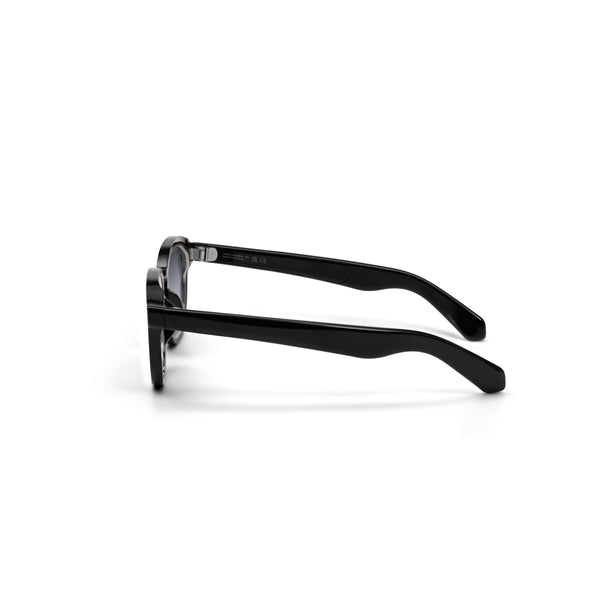
If you're comparing Sutyo vs. Ampere Dusk, you're looking at two different approaches to electrochromic sunglasses.
Both use electronically controlled lenses to let the wearer change tint instead of relying on a single fixed shade. But the similarity largely ends there.
Ampere Dusk combines electrochromic lenses with smart-glasses features such as open-ear audio, microphones, Bluetooth connectivity, and app-based controls. Sutyo takes a more eyewear-focused approach, combining adjustable tint with a design-led collection and, on selected models, color-changing technology.
So which one is better? There is no universal answer.
Ampere Dusk is designed as a smart pair of sunglasses with adjustable tint. Sutyo is designed around adjustable light, color, and the experience of wearing sunglasses.
Understanding that difference can make the choice much easier.
Sutyo vs. Ampere Dusk: What Do They Have in Common?
Before looking at the differences, it's worth understanding why these products belong in the same conversation. Both move beyond conventional fixed-tint sunglasses by using electrochromic technology.
Both Let You Change the Lens Tint
Traditional sunglasses have a fixed lens tint. Once you choose the pair, the lens stays at that level. Electrochromic sunglasses introduce a different approach. An electrical signal changes the optical state of the lens, allowing the wearer to adjust the amount of tint.
Ampere describes Dusk as an app-enabled tint-changing smart sunglass. Its official product page says the lens can be adjusted through the frame or the Ampere app, with the company stating that the tint can change in 0.1 seconds.
Sutyo uses the same fundamental idea of electronically controlled tint, but its current LightShift collection is designed around swipe-based adjustment. Its Pitch, Oxide, and Aurora Fade models are listed with LightShift Cat.1–Cat.3 adjustment.
This means both products address the same basic problem:
Why should your sunglasses stay at one tint when the light around you keeps changing?
Both Are Designed for Changing Light
The use case is also similar. You may move from bright sunlight into shade, from an outdoor environment into a building, or through different weather conditions during the same day.
A fixed lens has to compromise.
An adjustable lens gives you another option.
This is one reason electronically controlled eyewear has attracted attention from technology and design publications. Core77, for example, described Ampere's Dusk line as user-adjustable electrochromic sunglasses and highlighted the appeal of changing tint without waiting for conventional photochromic lenses to transition.
The underlying consumer proposition is straightforward:
Instead of changing sunglasses, change the tint.
Where Sutyo and Ampere Dusk Take Different Directions
The biggest difference is not whether the lenses can change.
It's what the brands believe the sunglasses should become once they can change.
Sutyo Puts Light and Eyewear First
Sutyo's current collection centers on adjustable light and contemporary eyewear design.
Its LightShift models—including Pitch, Oxide, and Aurora Fade—offer Cat.1 to Cat.3 tint adjustment, while Prism Veil combines LightShift with ColorShift. Sutyo also lists UV400 protection, IPX4 resistance, magnetic charging, and prescription-ready functionality across relevant models.
The result is a relatively focused product proposition:
Change the light. Keep the eyewear.
The technology exists primarily to change how the sunglasses respond to light and, with ColorShift, how they express color.
This makes Sutyo particularly relevant to people who think of sunglasses first as eyewear, rather than as a wearable electronics platform.
Ampere Dusk Adds a Smart-Glasses Layer
Ampere takes a broader approach.
The original Dusk combines electrochromic lenses with:
- Open-ear audio
- Integrated microphones
- Bluetooth connectivity
- Voice-assistant support
- App-based controls
- Built-in location finder
- Polarized lenses
According to Ampere's current product information, Dusk provides up to seven days of app-enabled tint adjustment and around four hours of active audio use per charge.
That makes the Dusk proposition different.
The question isn't only:
“How should my lenses respond to light?”
It is also:
“What else can my sunglasses do?”
For someone looking for music, calls, voice assistance, and adjustable tint in one device, that can be a meaningful advantage.
Adjustable Tint vs. Smart Features: Which Experience Fits You?
This is where the comparison becomes more useful than a simple specification chart.
Choose Sutyo If You Want Eyewear-Centered Technology
Sutyo may be the better fit if your priorities are:
- Adjustable tint
- A design-led eyewear experience
- Light and color as part of the product
- Everyday styling
- Prescription-ready options
- A simpler relationship with technology
Sutyo's current collection is intentionally varied in form, with Pitch, Oxide, Aurora Fade, and Prism Veil offering different visual identities while retaining the brand's adaptive-light approach.
Prism Veil goes one step further.
Its ColorShift technology allows the lens to transition between clear, blue, violet, and red while also providing LightShift tint adjustment. That means Sutyo is not treating electronic lens technology purely as a way to make sunglasses darker or lighter. It also explores what happens when color becomes adjustable.
Choose Ampere Dusk If You Want More From One Device
Ampere Dusk may be more appealing if you want your sunglasses to combine several functions.
The built-in audio system lets the wearer listen to music and podcasts, take calls, and interact with voice assistants without using conventional earbuds. Ampere also includes app-based tint control and a built-in finder function.
This creates a very different value proposition.
Instead of thinking:
“I want sunglasses that adapt to light.”
you might be thinking:
“I want smart sunglasses that also adapt to light.”
That's an important distinction. Neither approach is inherently better. They simply prioritize different things.
What Do Reviews Say About Ampere Dusk?
Third-party reviews also help explain where Dusk's strengths and limitations sit.
Reviewed tested the original Dusk and highlighted its combination of electrochromic tint control and built-in audio. The publication noted that users could change tint through the frame or app, while also pointing out limitations in the darker tint experience and audio performance.
Gear Patrol similarly praised the Dusk's fast tint adjustment and described its ability to change tint in about 0.1 seconds, while noting that the product's audio and overall design did not necessarily make it a category-leading pair of sunglasses.
These reviews are useful because they reveal an important point about smart eyewear:
Adding more technology does not automatically create a better eyewear experience.
The individual parts still need to work together.
Technology Is Only Valuable When It Improves the Experience
This is where Sutyo takes a different product philosophy. Instead of using adjustable tint as one feature inside a larger smart-glasses system, Sutyo puts the lens experience closer to the center of the product.
The question becomes:
- Does the tint feel intuitive?
- Does the frame still feel like sunglasses?
- Does the technology fit naturally into everyday wear?
- Can the product express something visually beyond its technical specification?
That distinction matters because eyewear is unusually personal.
You don't simply carry it.
You wear it on your face.
Sutyo vs. Ampere Dusk: Which One Should You Choose?
There is no single winner because the two products solve slightly different problems.
| Sutyo | Ampere Dusk | |
|---|---|---|
| Core focus | Adaptive eyewear | Smart sunglasses |
| Electrochromic tint | ✓ | ✓ |
| Adjustable tint | ✓ | ✓ |
| App control | Product-dependent | ✓ |
| Built-in audio | — | ✓ |
| Microphones | — | ✓ |
| Voice assistant | — | ✓ |
| Color-changing technology | Selected models | — |
| UV protection | UV400 | 100% UVA/UVB claimed by Ampere |
| IPX4 | ✓ | ✓ |
| Prescription-ready | Selected models | Dusk Rx available separately |
| Design direction | Fashion / eyewear-led | Smart-glasses / tech-led |
The table should not be read as a simple scorecard.
Instead, it shows two different interpretations of electrochromic sunglasses.
If Your Priority Is Light
Look closely at the lens system.
Sutyo's current LightShift models offer Cat.1–Cat.3 adjustment, while Prism Veil adds ColorShift.
If Your Priority Is Smart Functionality
Ampere Dusk gives adjustable tint a larger ecosystem that includes audio, calls, voice assistants, Bluetooth, and app control.
If Your Priority Is Personal Style
This becomes subjective.
Sutyo's collection is built around several different frame identities, while Dusk uses a more recognizable smart-sunglasses approach.
The right choice depends on whether you want your technology to become part of your eyewear identity or part of your wearable-tech toolkit.
Frequently Asked Questions
Are Sutyo and Ampere Dusk both electrochromic sunglasses?
Yes. Both use electronically controlled lens technology to change tint. Sutyo's current collection uses LightShift, while Ampere Dusk uses electrochromic lenses with frame and app controls.
Which is better, Sutyo or Ampere Dusk?
It depends on what you want from the sunglasses. Sutyo focuses on adjustable light, color, and eyewear design, while Ampere Dusk combines adjustable tint with audio and smart-glasses functionality.
Do Ampere Dusk sunglasses have audio?
Yes. The original Dusk includes open-ear audio, integrated microphones, Bluetooth connectivity, and voice-assistant support. Ampere also sells the Dusk Lite without the audio component.
Can Sutyo sunglasses change color?
Selected models can. Sutyo's Prism Veil combines LightShift with ColorShift, allowing the lens to transition between multiple colors as well as adjust its tint.
Are Sutyo sunglasses prescription-ready?
Selected Sutyo models support prescription lenses. Prism Veil, for example, currently offers prescription-lens support through its product page.
Do Ampere Dusk sunglasses have polarized lenses?
Yes. Ampere states that Dusk uses polarized lenses and claims they block 100% of UVA and UVB rays.
How fast do Ampere Dusk lenses change tint?
Ampere states that Dusk can adjust tint in 0.1 seconds. Gear Patrol independently described the transition as occurring in about 0.1 seconds in its review.
Explore Sutyo
Discover Sutyo's LightShift and ColorShift eyewear and see how electrochromic technology can change the relationship between sunglasses, light, and personal style.