Why Does Tint Speed Matter?
Sunglasses are often used in environments where light changes quickly.
Examples include:
- Entering a tunnel while driving
- Moving between indoor and outdoor spaces
- Cycling through changing shadows
- Traveling between different environments
In these situations, the question is not only:
“How dark can sunglasses become?”
It is:
“How quickly can they adapt?”
A faster tint response helps sunglasses keep up with changing conditions.
How Do Electrochromic Sunglasses Change Tint?
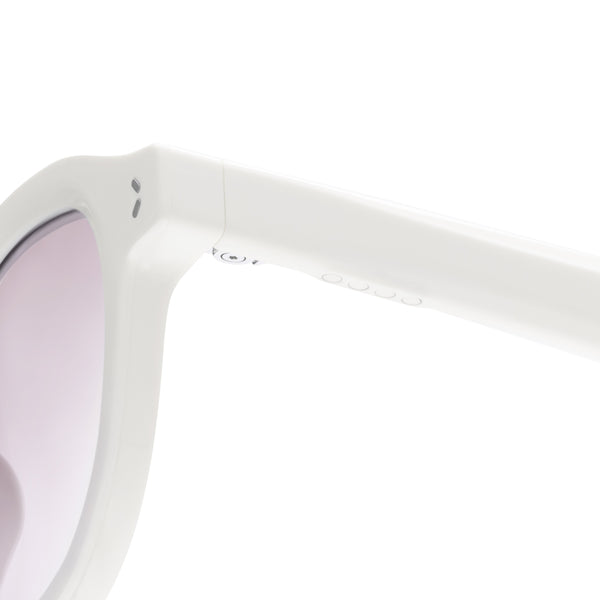
Electrochromic sunglasses use electrically controlled lens technology.
Unlike photochromic lenses, which depend on UV exposure, electrochromic lenses respond to an electrical signal.
The process:
1. User adjusts the tint control
The wearer activates the lens adjustment.
2. Electrical signal reaches the lens
The electronic system controls the lens state.
3. Lens light transmission changes
The electrochromic material changes how much light passes through.
4. Tint reaches the selected level
The wearer experiences a darker or lighter lens state.
Electrochromic vs Photochromic Speed
The difference between the two technologies comes from how they respond.
| Feature | Electrochromic Sunglasses | Photochromic Sunglasses |
|---|---|---|
| Trigger | Electrical control | UV exposure |
| User control | Yes | No |
| Response source | Electronic signal | Chemical reaction |
| Environment dependency | Lower | Higher |
| Best use case | Changing light conditions | General outdoor use |
How Is Electrochromic Tint Speed Measured?
Tint speed should be measured under controlled conditions.
A proper test evaluates:
Starting State
The lens begins at a defined tint level.
Example:
Clear state.
Target State
The test measures how long it takes to reach:
- Dark tint
- Clear tint
Measurement Method
A typical tint-speed test records:
- Start time
- Tint change process
- End time when the target state is reached
The result:
A measurable response time.
Sutyo Tint Speed Testing Approach
Sutyo is developing a structured tint-speed test to evaluate electrochromic lens performance.
The testing focuses on:
- Complete transition time
- Darkening response
- Lightening response
- Repeatability
The goal is to provide measurable performance data rather than relying only on subjective descriptions.
Why Real-World Speed Matters
Laboratory numbers are useful.
But sunglasses are used in real environments.
A driver does not experience:
“UV exposure level.”
A cyclist does not experience:
“Lens activation conditions.”
They experience:
- Bright sunlight
- Sudden shade
- Tunnel entrances
- Changing weather
The value of adjustable tint comes from responding when the wearer needs it.
Does Faster Tint Mean Better Sunglasses?
Not necessarily.
Tint speed is only one part of the experience.
A complete electrochromic sunglasses experience also depends on:
- Tint range
- Optical clarity
- Comfort
- Control method
- Battery performance
- Design
The best technology balances speed with everyday usability.
Why Sutyo Focuses on User-Controlled Tint
Traditional sunglasses force users to choose one tint level.
Photochromic sunglasses react automatically.
Electrochromic sunglasses create another option:
User-controlled light management.
With Sutyo:
Bright sunlight: → Increase tint
Changing environment: → Adjust tint
Lower light: → Reduce tint
The wearer decides.
Where Fast Tint Adjustment Matters Most
Driving
Light conditions can change within seconds.
Examples:
- Highway sunlight
- Tunnel entrances
- Overcast roads
Cycling
Riders move between:
- Open roads
- Trees
- Urban shadows
Travel
One pair of sunglasses can adapt across:
- Airports
- Streets
- Indoor spaces
Frequently Asked Questions
How fast do electrochromic sunglasses change tint?
Electrochromic sunglasses adjust tint through electrical control, allowing faster response than UV-dependent photochromic lenses. Actual response time depends on lens technology and testing conditions.
Are electrochromic sunglasses instant?
Electrochromic sunglasses are designed for rapid tint adjustment through electrical control. The exact transition speed should be measured through controlled testing.
How is electrochromic lens speed tested?
Tint speed is measured by recording the time required for lenses to move between defined tint states under controlled conditions.
Why is tint speed important for driving?
Driving involves rapidly changing light environments, such as tunnels and changing weather. Faster tint adjustment helps sunglasses respond more effectively to these situations.
Conclusion
The advantage of electrochromic sunglasses is not only that they can change tint.
It is that they give users control over when and how that change happens.
As adjustable tint technology develops, measuring real response time becomes increasingly important.
A better sunglasses experience is not just about blocking light.
It is about managing light when you need it.